
Advocacy Approach

Business Advocacy for Sustainable Performance

NSBS approaches consulting as business advocacy. The work helps leaders redesign the conditions underneath strain, turnover, and uneven performance rather than treating them as isolated people problems.

Foundation

Workforce Systems Architecture

Workforce Systems Architecture is the practice of reading how structure shapes trust, clarity, coordination, manager load, and the lived experience of work.

Retention, engagement, managerial stability, and workforce performance emerge from the interaction of workload, clarity, accountability, handoffs, feedback loops, incentives, and relational conditions.

NSBS helps organizations examine those mechanisms as a system rather than treating each symptom as a separate problem. That makes the work more useful than standard consulting when the real need is structural clarity and a more disciplined read on what the system is actually producing.

  • Role definition and operating expectations
  • Decision logic and governance patterns
  • Managerial load and support capacity
  • Ramp pathways, communication flows, and feedback loops

Principle

Structural First Principle

Before an organization asks training, coaching, or behavior change to solve a problem, the structure itself should be examined. NSBS starts with design conditions because downstream symptoms usually reflect upstream misalignment.

Structural-first comparison

The Same Pressure Can Be Handled in Two Very Different Ways.

Observed condition

Leaders notice strain, inconsistency, turnover drag, or rising managerial load.

Symptom management

A response that treats the visible effect but leaves the system unchanged.

  1. Pressure appears in turnover, overload, or engagement drag.
  2. The response centers on training, effort, or managerial compensation.
  3. The same instability returns because the underlying design remains intact.

Outcome: effort rises, ambiguity remains, and the pattern repeats.

Structural-first response

A response that interprets the signal, then redesigns the conditions creating it.

  1. Pressure is assessed as a systems signal rather than a people flaw.
  2. Roles, handoffs, governance, incentives, and workflows are redesigned.
  3. The system becomes clearer, steadier, and less dependent on heroic effort.

Outcome: pressure becomes legible, and steadier performance has somewhere real to come from.

Why It Matters

When the structure is misaligned, even skilled people expend energy compensating for it. Training may help temporarily, but it does not remove the recurring conditions that are generating strain, weakening retention, and distorting performance.
What NSBS Looks For

Gaps in clarity, unstable handoffs, conflicting incentives, overloaded managers, unresolved ambiguity, and design choices that create avoidable drag.

Framework

SPARK Is the Diagnostic Architecture Behind the NSBS Method

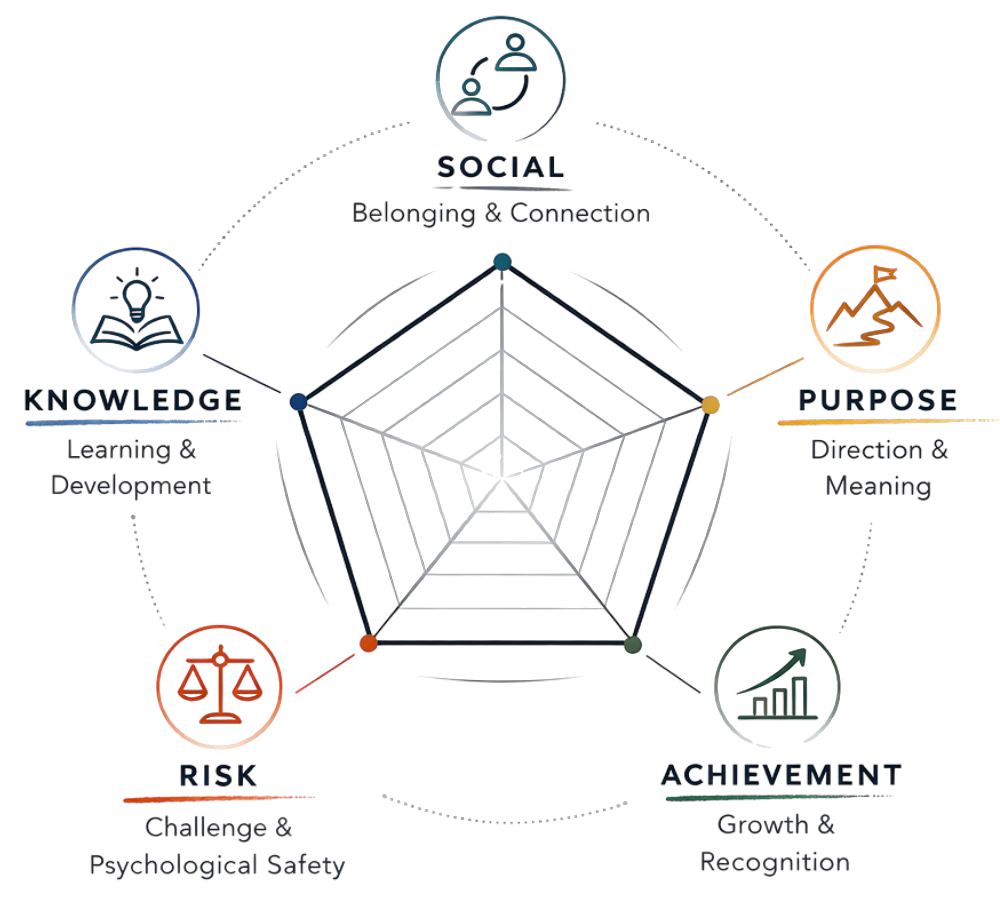
SPARK gives NSBS a disciplined way to assess workforce system health, map where friction is being generated, and design interventions that strengthen operating stability.

The model keeps diagnosis anchored to conditions leaders can actually redesign: coordination, direction, progress, supported challenge, and information flow.

Assessment

Creates a five-condition baseline before recommendations are made, so the work starts with an actual systems read instead of assumption.

Friction Mapping

Helps trace turnover, hesitation, manager strain, and execution drag back to the structural condition producing them.

Workforce Design

Turns findings into clearer roles, handoffs, support structures, and intervention priorities leaders can actually use.

Organizational Stability

Keeps redesign aimed at steadier performance over time rather than temporary symptom relief or one-off fixes.

SPARK model diagram showing Social at the top, then clockwise Purpose, Achievement, Risk, and Knowledge

One model used to connect assessment, friction mapping, workforce design, and long-term organizational stability.

Social

Measures trust reliability, coordination quality, and how much repair work teams need to stay connected under pressure.

Purpose

Measures strategic clarity, decision direction, and whether people can interpret priorities without repeated translation.

Achievement

Measures whether progress is visible, credible, and supported by workflows that allow follow-through to hold.

Risk

Measures supported challenge, experimentation, and whether people can question assumptions without fear-based hesitation.

Knowledge

Measures information flow, guidance quality, and whether context and decision logic travel cleanly through the system.

Clarity

Neuroinclusive Design

Neuroinclusive design is treated here as a structural discipline. The aim is to reduce avoidable friction, ambiguity, and overload so more people can contribute under steadier conditions.

Better systems reduce ambiguity, overload, and harmful instability while creating enough safety for people to ask questions, test ideas, and contribute more fully. They clarify what matters, improve the flow of information, and create steadier operating conditions for a wider range of people. That is good for dignity, and it is also good for long-term performance.

  • Reduce ambiguity that forces people to infer too much
  • Lower overload created by poor workflow design
  • Support challenge and experimentation without unnecessary fear
  • Improve signal clarity around priorities and decisions
  • Strengthen stability so energy can go toward contribution

Operating sequence

A Practical Sequence for Turning Structural Insight into Durable Change

The sequence keeps diagnosis, redesign, implementation, and recalibration connected so the work stays clear, measurable, and operationally useful.

01

Discovery

Low-disruption assessment clarifies pressures, strengths, and structural signals before change begins.

02

Design

Findings are translated into clearer expectations, workflows, supports, and intervention priorities the business can actually use.

03

Integration

Changes move into practice with realistic pacing, leadership reinforcement, and clear operating ownership.

04

Adaptation

Feedback loops and lightweight measurement keep the system responsive without restarting the work every quarter.

Next step

Move from Framework to Action

If you are seeing structural strain but need a clearer read on where to begin, NSBS can help translate SPARK into diagnosis, redesign priorities, and next-step decisions.